
Batteries and Charging in Cairns
Heat is what kills batteries in this part of the country, not cold. And a battery that keeps going flat is usually reporting a fault somewhere else.
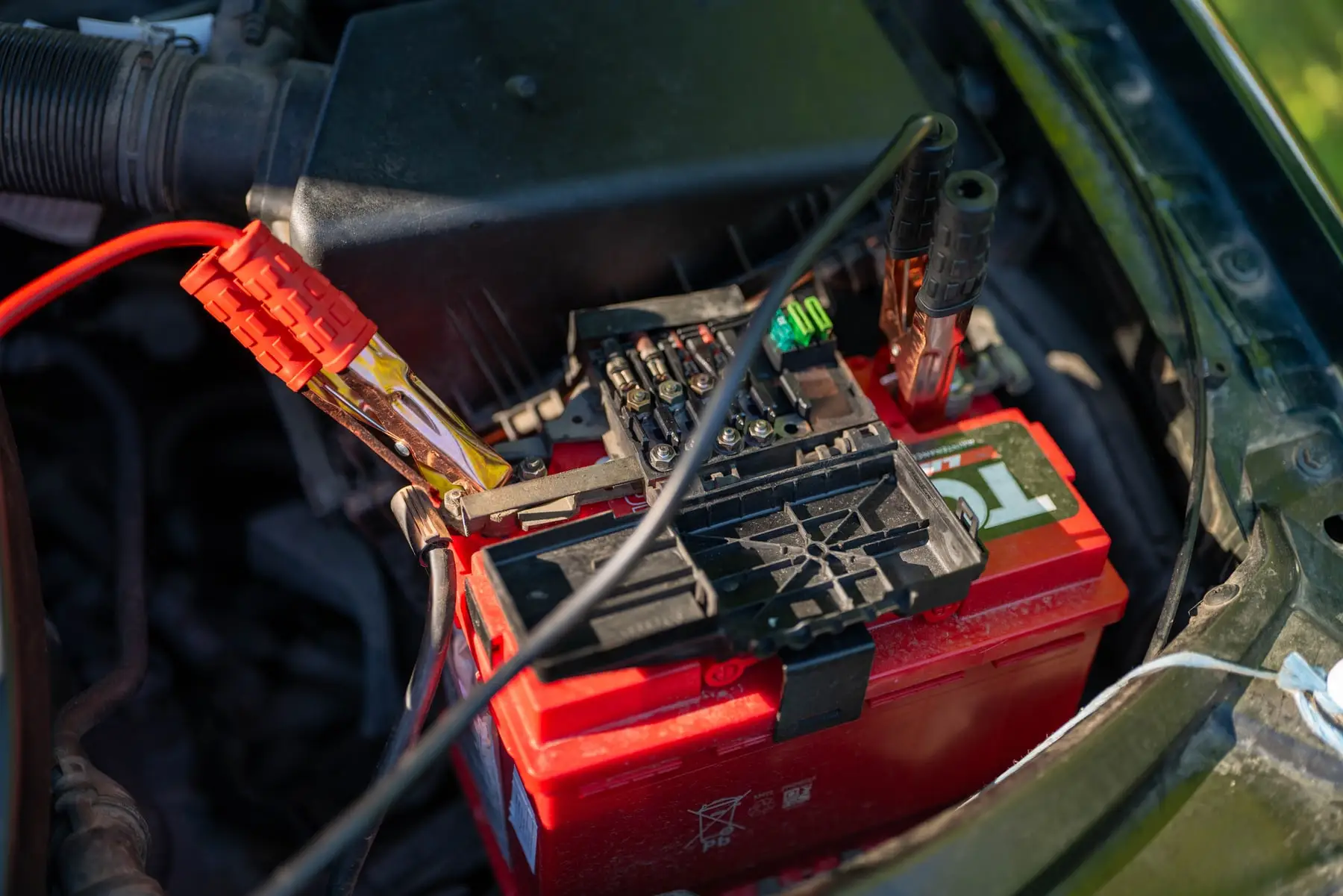
- Battery load tested rather than replaced on age
- Charging system and parasitic drain tested too
- Correct specification fitted, including stop-start types
- Terminals and earth straps cleaned and checked
- Told if the battery is a symptom rather than the cause
Heat kills batteries, not cold
People associate flat batteries with cold weather, because that is when a weak one finally fails to start the car. But cold is the event, not the cause. Heat is the cause, and this is one of the hardest places in the country on a battery.
Sustained high under-bonnet temperatures accelerate the chemical processes that wear a battery out, and they evaporate electrolyte. A battery that might do six years in a cool climate will commonly do three or four here. That is normal, and it is worth knowing so you are not surprised, and so nobody convinces you that a three year old battery must still be fine.
The short-trip problem makes it worse. A car doing a few kilometres at a time never puts back what starting took out, so it lives permanently a bit undercharged, which shortens its life again. That is a common pattern in the newer estates around Bentley Park and on any car mostly used for school runs and the shops.
A flat battery is often a symptom
This is the part worth paying attention to, because it is where money gets wasted.
If your car keeps going flat, the battery may be perfectly good and reporting somebody else’s fault. Three things cause this:
The alternator is not charging properly. Undercharging leaves the battery flat. Overcharging cooks it, which kills a new battery in months and is the reason a replacement sometimes fails surprisingly fast.
Something is drawing current with the car switched off. A parasitic drain: a module not going to sleep, an aftermarket accessory wired badly, a light staying on somewhere you cannot see. It is measurable, and finding it is a proper diagnostic job rather than a parts swap.
A bad connection. Corroded terminals or a poor earth strap. Cheap, common in this climate, and it produces symptoms that look exactly like a dying battery: slow cranking, odd electrical behaviour, warning lights that make no sense.
So the battery gets load tested, the charging system gets tested, and if the story suggests it, the drain gets measured. Replacing the battery without doing that means you may be back in a few months with the same problem and one less excuse.
Fitting the right one
Batteries are not interchangeable, and it matters more now than it used to.
A vehicle with stop-start needs a battery designed for it, either AGM or EFB depending on what the manufacturer specified. Fitting an ordinary battery to a stop-start car is a false economy: it will not last, because it is being asked to do a job it was not built for.
Many modern vehicles also need the new battery registered to the car’s electrical system, so the charging strategy knows it is dealing with a new battery rather than an old one. Skip that step and the car will keep charging as though the battery is four years old, which shortens the life of the one you have just paid for.
The physical fit matters too: terminal layout, hold-down, and the vent arrangement on batteries that need one.
Before you ring
If the car will not start, it is worth knowing which of these you have, because they point in different directions.
Nothing at all, no lights, no click: usually a completely flat battery or a connection.
A rapid clicking: the battery has some charge but not enough to turn the engine.
The engine turns over normally but does not fire: this is not a battery problem. That is a fuel, spark or diagnostics job, and telling us the engine cranks fine saves an unnecessary conversation about batteries.
There is more on why batteries have a shorter life up here in our note on car batteries in the tropics.
Suburbs we take this work from
- Bentley Park
- Earlville
- Edmonton
- Gordonvale
- Manunda
- Portsmith
- Redlynch
- Woree
- Smithfield
- Trinity Beach
Somewhere else around Cairns? Ask when you ring. call 0468 084 513 and ask.
Get it booked
Tell us the make, model, year and kilometres and what the car is doing, and you get a real number for batteries and charging rather than a starting-from figure.
- Workshop hours
- Monday to Friday, 7:30am to 5pm
- We cover
- Cairns, the southern corridor to Gordonvale, and north to Trinity Beach
- Vehicles
- All makes, petrol and diesel, including 4WDs and work utes
- Send the make, model, year and roughly what the odometer reads. Half of what decides a price is which service interval the car is up to, and none of that is guessable from the model alone.
- Say what the car is doing and when it does it. A noise that only turns up cold is a different fault from one that only turns up hot, and that single detail regularly saves an hour on the hoist.
- The number you approve is the number you pay. If the job turns out bigger once it is apart, the work stops and you get a call, rather than a larger invoice at the end.